
How to Approach Social Media as a Founder (When You’re a Private Person)

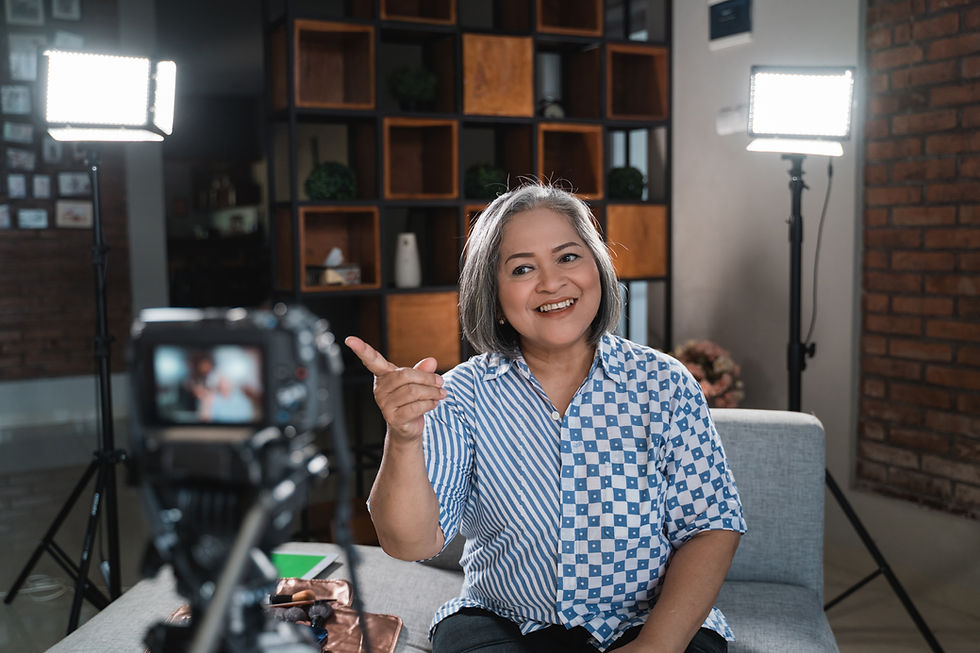
We are living in a social media world. And I am a social media girl. Maybe?
It’s not enough to run your business, sell your products, fundraise, and do everything in between — now, entrepreneurs are also expected to showcase themselves across social media platforms.
“You're dead if you don’t market yourself. It’s abundantly clear that the product no longer sells itself,” said Lester Chen, a partner at Andreessen Horowitz, in a recent Business Insider article. “It was not like that at all 10 years ago.”
But what if you are a private person and don’t want your entire life on social media? Here are a few ways to show up online, protect your privacy, and still build something people care about.
1. Get Clear on Why You’re Posting
Before you worry about what to post, take a step back and decide what you want social media to do for your business.
· Do you want to drive product sales?
· Build trust with customers?
· Create community?
· Establish your voice as a founder?
Once you know the goal, it gets much easier to decide what kind of content makes sense.
2. Know the Difference Between Personal and Private
· Personal = your perspective, your lessons, your story
· Private = your relationships, your health, your finances, your real-time emotions
You can be personal without sharing everything. A simple gut check helps: would you feel okay if a customer, investor, or future partner read this? If not, it probably doesn’t need to go online.
3. Figure Out Your Content Comfort Zone
It helps to decide ahead of time what feels okay to share. Maybe that includes parts of your routine, your workspace, or your founder perspective. Maybe it doesn’t include your family or your private spaces. There’s a big difference between showing your kitchen and showing your child’s bedroom.
· Founder perspective — what you’re building, learning, and navigating
· Brand storytelling — your product in real life and customer moments
· Selective personal moments — glimpses of your life that feel human, not invasive
You get to decide where the line is. For example, you can talk about how tricky it is to plan a vacation while running a business without sharing your exact location or travel plans.
4. Don’t Share in the Moment if It’s Still Raw
This one matters. Some people are comfortable sharing emotions in real time, and others are not. If something still feels fresh, give yourself a little space before posting. You can always share the lesson later without sharing it in the middle of living through it.
5. Boundaries Matter in Comments and DMs Too
You do not have to respond to every comment or engage with every opinion. Think about what feels manageable as your audience grows. Boundaries do not make you unfriendly. They help you keep showing up without burning out.
6. Capture Content Without Making Your Whole Life Content
Some founders genuinely enjoy creating content. Others would rather record one quick reel and get back to work. Either way is fine. Content does not have to feel invasive to be effective. It just needs to feel thoughtful and true to you.
· Product in real life (shelf, kitchen, events)
· Behind-the-scenes moments (packing orders, prepping for a pitch)
· Founder commentary (quick thoughts, lessons, observations)
· Customer interactions (reviews, reactions, testimonials) — always ask permission before filming or sharing online
· Event moments (panels, networking, brand activations)
7. Make It Easy to Capture Content
If capturing content feels complicated, you probably will not do it. The good news is you do not need a full production setup. A few simple tools can make the whole thing feel much easier.
· Your smartphone
· A small tripod (stability instantly upgrades quality)
· A simple light or natural window light
· Optional: a clip-on microphone for clearer audio
8. Create a Simple “No-Regret” Rule
Before you post, ask yourself:
· Would I say this in a room full of customers and partners?
· Would I be okay with this resurfacing in three years?
· Am I comfortable sharing this?
If the answer is no, that’s okay. You do not have to share something just because it might perform well. As you get more comfortable being visible, you can always choose to share more later.
Bottom Line: As CPG founders, we didn’t sign up to be content creators. Most of us want to turn a personal passion, problem, or purpose into a product that impacts people’s everyday lives. However, in today’s world, entrepreneurs are expected to be creators, operators, and builders. For introverts or people who prefer to be behind the scenes, stepping into the social media world can feel uncomfortable. The goal is to find a balance that gives both you and your brand a presence while still feeling authentic to your values.


Comments